
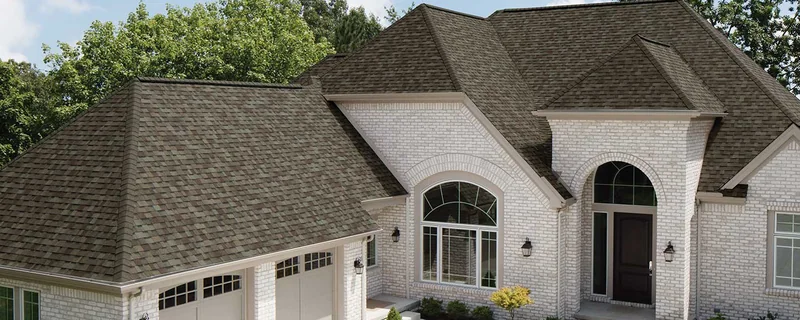
Siding is the largest single surface on your house and the one doing the most work: it carries wind-driven rain, hail, freeze-thaw cycles and summer sun, and it is the first thing anyone sees from the street. When it fails, the damage does not stay on the outside — water gets behind the panel, into the sheathing, and into the wall cavity, where it turns into rot, mold and insulation that no longer insulates. John Beal Roofing installs and repairs vinyl, insulated vinyl, fiber cement, engineered wood, steel, aluminum and cedar siding, along with soffit, fascia, trim and wraps, with our own in-house crews across 143 cities in Missouri, Kansas, Illinois and Indiana. Free inspection, written itemized estimate, and a company that has been answering its phone in this region since 1947.
What a proper siding job includes
- Full tear-off of the old siding down to the sheathing, so what is behind it gets seen rather than covered up
- Sheathing inspection and repair — soft, delaminated or rotted board replaced, not sided over
- A weather-resistive barrier (house wrap) installed correctly, lapped shingle-style so water drains out rather than in
- Flashing at every opening — window and door heads, sills, penetrations, and where siding meets a roof line
- Kickout flashing where a roof edge meets a wall, the single most commonly omitted detail in siding and a leading cause of hidden wall rot
- Proper fastening and expansion allowance, because vinyl must be hung to move, not nailed tight
- Soffit, fascia and trim addressed as part of the same assembly, with attic intake ventilation kept clear
- Sealants and terminations at corners, transitions and abutments
- Permits pulled where your jurisdiction requires them
- Full cleanup — nails swept, cutoffs hauled, and a final walk with you before we leave
Siding materials, compared honestly
Vinyl is the most installed siding in America for real reasons: it never needs painting, resists rot and insects, comes in a wide color range, and it is the best value per square foot. Heavier gauges hold their shape and read far less plastic than builder-grade. Its limits are impact — hail can crack it, especially in cold — and extreme heat near a grill or reflective glass.
Insulated vinyl is vinyl with rigid foam backing laminated to the panel. It adds real R-value, stiffens the panel so it looks flatter and more like wood, and quiets the house. It costs more and it is the upgrade that actually shows.
Fiber cement is the premium workhorse: cement, sand and cellulose, non-combustible, dimensionally stable, immune to insects, and it holds paint for 15 years or more. It carries a genuine architectural look. It is heavy, it needs careful cutting and a longer install, and it costs more than vinyl.
Engineered wood gives you real wood grain with better stability than cedar, comes pre-primed or pre-finished, and installs faster and lighter than fiber cement. It needs its edges and cut ends sealed and its paint maintained.
Steel and aluminum are the hail answer. Steel is the most impact-resistant siding we install and a serious option in hail alley; aluminum is lighter and dent-prone but never rusts. Both are non-combustible.
Cedar is beautiful and historically correct on certain homes, and it is the highest-maintenance option on the board — stain or paint on a cycle, or it grays and checks.
Which siding is best for Midwest weather?
Our weather is the whole conversation here: hail in spring, straight-line wind, 100-degree summers, hard freezes, and 50-degree swings inside a single week. That combination punishes siding in three specific ways — impact, thermal movement, and water intrusion at the details.
What we actually recommend, by priority:
- Worried most about hail? Steel, then fiber cement. Vinyl cracks under large hail, particularly in cold weather when it is brittle.
- Worried about wind? Fastening and panel engagement matter more than material. A properly hung panel at the correct nailing schedule outperforms a premium panel hung carelessly.
- Worried about energy bills? Insulated vinyl or a continuous rigid insulation layer behind the siding. Walls are where a surprising amount of a Midwest energy bill leaves the house.
- Worried about maintenance? Vinyl or insulated vinyl. No painting, ever.
- Want the best-looking result and will maintain it? Fiber cement or engineered wood.
And regardless of material: the house wrap, the flashing and the kickout details decide whether a wall lasts. Material is the part you can see; the details are the part that keeps the wall dry.
Hail, wind and storm damage to siding
Siding damage is the most under-claimed storm loss on a house, because homeowners look up at the roof and never look at the walls. Hail cracks and punctures vinyl, dents steel and aluminum, chips fiber cement and strips paint. Wind pulls panels loose at the lock, tears them off, and drives rain behind panels that look intact from the driveway.
What to look for after a storm: cracks and punched holes on the storm-facing elevations, chipped or gouged panels, panels that have unlocked or waved out at the bottom, dents and dings on metal siding and window wraps, torn window screens, and dented gutters and downspouts — the soft metals that tell an adjuster the storm was real.
Here is what matters financially: when a storm damages your roof, the siding is usually part of the same claim. Cracked panels, damaged wraps, torn screens and dented gutters belong in the scope. Because we roof and side with our own crews, one inspection documents the entire exterior and one written scope goes to your adjuster instead of three contractors on three schedules. See storm damage and roof insurance claims.
One caution specific to vinyl: color-matching a discontinued line years later is often impossible, which is why a hail claim on a partial elevation can legitimately support replacing a full elevation or the whole house rather than patching in panels that will never match.
Signs your siding needs attention
- Cracked, split or punctured panels, or panels with pieces missing
- Panels that have come unlocked, wave, buckle or rattle in wind
- Soft spots when you press the wall — that is sheathing, not siding, and it means water has been behind it
- Peeling or bubbling paint on interior walls, or interior wall stains with no plumbing above them
- Mold, mildew or dark streaking on the siding surface, especially on north elevations
- Rotted or spongy trim, corner boards, window casing or fascia
- Woodpecker holes, wasp nests or insect activity behind panels
- Rising heating and cooling bills with no other explanation
- Warped, faded or chalky panels where the finish has failed
- Daylight or drafts around windows and outlets on exterior walls
- Caulk joints that keep failing at corners and transitions
- Siding that needs painting every few years instead of every 10 to 15
Repair a section, or replace the whole wall?
Repair is right when the damage is isolated and confined: a few cracked panels on one elevation, a section of trim, a length of soffit or fascia, a failed flashing detail, or storm damage on a single wall — assuming a matching panel can still be sourced.
Replacement is right when the problems are systemic: damage across multiple elevations, a discontinued color that cannot be matched, widespread fading that will make any repair obvious, soft sheathing found in more than one place, or siding at the end of its service life that has already been patched. There is also the honest economic case — three separate repair visits on an old wall usually cost more than doing the elevation once.
The test we apply is the same one we apply to roofs: will this repair hold for years, or only until the next storm? We will tell you when a repair is genuinely the right answer even though it is the smaller job.
What siding costs, and what moves the number
We do not publish a per-square price, because two houses with identical square footage can differ by half. What actually drives siding cost:
- Material and grade — vinyl gauge, insulated versus standard, fiber cement versus engineered wood
- Total wall area, which is driven by stories and roofline complexity more than floor plan
- How many corners, gables, dormers and transitions — cuts and terminations are the labor
- Windows and doors, each one a flashing and trim detail
- Tear-off and disposal of the existing siding, and whether there are two layers
- Sheathing repair found after tear-off
- Trim package — corner boards, window and door casing, soffit, fascia, wraps
- Insulation added behind the siding
- Access — two and three-story elevations, steep grade, tight lot lines
- Permits and any code requirements in your jurisdiction
The inspection and written itemized estimate are free, and the estimate is itemized so you can compare it line by line against any other bid — which is the only honest way to compare siding proposals.
How the work goes, start to finish
- Free inspection and measurement. Every elevation walked and photographed, trim and sheathing condition noted, findings shown to you.
- Material and color selection, with samples in your hand against your roof and brick rather than off a screen.
- Written itemized scope and price — material, trim package, flashing, warranty, all on paper before anything starts.
- Insurance, if it applies. We document the damage and meet your adjuster at the property.
- Permits and scheduling.
- Protection and prep — landscaping covered, fixtures and shutters removed.
- Tear-off of the existing siding and disposal.
- Sheathing repair and a correctly lapped weather-resistive barrier.
- Flashing at windows, doors, penetrations and roof-to-wall junctions, including kickouts.
- Siding installation at the manufacturer's nailing schedule, with expansion allowance where the material requires it.
- Trim, soffit, fascia and wraps, with attic intake ventilation left clear.
- Cleanup and final walk — magnet sweep, debris hauled, walked with you before we leave.
Most homes run three to seven working days depending on size, material and how much sheathing has to come out. Fiber cement runs longer than vinyl. Weather moves siding schedules more than anything else.
Insulation, energy bills and wall performance
Walls are a bigger share of a Midwest energy bill than most homeowners expect, and a siding project is the one time in 30 years the wall is open. Three upgrades are worth considering while it is:
- Insulated siding or continuous rigid insulation behind the panel, which reduces thermal bridging through the studs — the heat path that cavity insulation cannot address
- Air sealing at penetrations, band joists and around window openings, which often does more for comfort than added R-value
- House wrap installed as a true drainage plane, lapped correctly, so the wall can dry
Insulated siding also stiffens the panel, deadens outside noise, and hides minor wall irregularities that thin vinyl telegraphs. It is the single upgrade customers most often tell us they are glad they paid for.
Siding, soffit, fascia and your roof edge
Siding does not end at the siding. The soffit is the underside of the overhang and it carries the intake ventilation your attic needs; the fascia is the board your gutters hang from. Get those wrong and you create roof problems from the ground up: blocked intake vents mean a hot attic that cooks shingles from underneath and drives ice dams in winter, and rotted fascia will not hold a gutter no matter how good the gutter is.
We install and repair roofing, siding, soffit, fascia, gutters and windows with our own crews, which means the roof edge is one company's responsibility instead of a seam between three trades pointing at each other. If your siding project touches the roof line — and it almost always does — that matters. See gutters and residential roofing.
Warranties: what covers what
Three separate warranties come with a siding job and they cover different things. The manufacturer's product warranty covers the material against defects, fading and, on many vinyl lines, hail — often with lifetime and prorated periods, and usually transferable once when you sell. The finish warranty on fiber cement and engineered wood covers the factory paint. And workmanship covers the installation itself — which is where nearly every real siding failure originates.
The practical points: product warranties are commonly voided by improper fastening, painting vinyl a darker color than rated, or pressure washing the panels at high pressure. Register your warranty after installation and keep the invoice — you will want it at resale, and a transferable siding warranty is a genuine selling point.
Maintenance that keeps siding looking new
- Wash it once a year with a garden hose, soft brush and mild detergent — low pressure, working bottom to top, rinsing top down
- Never high-pressure wash vinyl or fiber cement, and never spray upward behind panels; it drives water into the wall and voids warranties
- Walk the perimeter each spring and after every hail or high-wind event, looking for cracks, unlocked panels and dents
- Keep mulch, soil and sprinklers off the siding — contact with wet soil is how insects and rot get in
- Trim shrubs and branches back at least a foot from the wall so it can dry
- Check and renew caulk at corners, transitions and where dissimilar materials meet
- Keep grills and reflective glass away from vinyl — both can warp a panel
- Repaint fiber cement and engineered wood on schedule, typically 10 to 15 years
- Fix a cracked panel promptly. The panel is cosmetic; the water behind it is not
Storm chasers and siding: the warning signs
Siding attracts the same out-of-state crews that hail brings out for roofs, and the same rules apply. Walk away from: an offer to cover, waive or absorb your deductible — that is insurance fraud in most states and it puts you at risk too, not just the contractor; pressure to sign before your adjuster has inspected; no local address, license number or certificate of insurance; a demand for cash or the full claim check up front; a price that only holds today; and a "free siding" pitch tied to a claim.
A siding warranty is only as good as the company still standing behind it. We are licensed and insured (License # 104.011957/105.007037), BBB Accredited, a BBB Torch Award for Ethics recipient, family-owned through three generations since 1947, with more than 50,000 satisfied customers, our own in-house crews in seven local markets, and 24/7 emergency service answered by a person.
Our seven local markets — 143 cities
We side homes in 143 cities from seven local offices. Each market has its own crews, its own phone and its own list of cities — open your market for the local number and the full city list.
- St. Louis — (314) 429-6000
Brick and frame housing stock from the 1920s through new subdivisions, with hail and straight-line wind as the recurring threat to walls and trim. - Kansas City — (816) 872-9500
Wide hail exposure on both sides of the state line, and a lot of 1960s–1990s vinyl now reaching the end of its service life. - Indianapolis — (317) 726-6000
Freeze-thaw cycling and wind-driven rain are the wall killers here, with fiber cement and insulated vinyl both popular replacements. - Springfield — (417) 429-1927
Ozarks-edge hail country. Impact resistance and correct flashing at roof-to-wall junctions matter more here than almost anywhere we work. - Columbia / Jefferson City — (573) 343-8993
Mid-Missouri sun exposure fades south and west elevations first; insulated siding is a common upgrade on older ranch stock. - Lake of the Ozarks — (573) 343-8993
Lake-area homes, second homes and steep lots, with heavy sun and wind off the water and long stretches of unoccupied months. - Metro East & Southern Illinois — (618) 549-0800
Storm corridor running up the Mississippi, with hail and wind claims common and a lot of older wood and aluminum siding still in place.
Siding questions, answered
Tap any question to open it.
How much does new siding cost?
It depends on material and grade, total wall area, how many corners, gables and windows there are, tear-off and disposal, any sheathing repair found underneath, the trim package, added insulation, access and stories. Two houses with the same square footage can differ by half. Our inspection and written itemized estimate are free.
What is the best siding for a Midwest home?
If hail is your main worry, steel then fiber cement — vinyl cracks under large hail, especially in cold. If maintenance is the worry, vinyl or insulated vinyl, which never need painting. If you want the best look and will maintain it, fiber cement or engineered wood. Regardless of material, the house wrap and flashing details decide whether the wall lasts.
How long does siding last?
Vinyl commonly 20 to 40 years, insulated vinyl at the higher end of that, fiber cement 50 years or more with paint cycles, engineered wood 20 to 30 with maintained finish, steel and aluminum 40 or more, and cedar 20 to 40 entirely depending on how faithfully it is stained or painted.
Is vinyl or fiber cement siding better?
Different trades. Vinyl costs less, never needs painting and resists rot and insects, but it can crack under hail. Fiber cement is non-combustible, dimensionally stable, holds paint 15 years or more and looks more architectural, but it is heavier, slower to install and costs more. Insulated vinyl sits between the two.
Is insulated siding worth the money?
In this climate, usually yes. It adds real R-value, reduces thermal bridging through the studs, stiffens the panel so it looks flatter and more like wood, quiets the house and hides minor wall irregularities. It is the upgrade customers most often tell us they are glad they paid for.
Does insurance cover siding damage?
Frequently, as part of the same storm claim as the roof — hail cracks and punctures, wind pulls panels loose, and dented wraps, torn screens and dented gutters all belong in the scope. Siding is the most under-claimed storm loss on a house because homeowners look up at the roof and never look at the walls.
What does hail damage to siding look like?
Cracks, punched holes and chips on the storm-facing elevations, gouged or spidered vinyl, dents on steel, aluminum and window wraps, stripped paint on fiber cement, plus the soft-metal evidence an adjuster reads — dented gutters, downspouts and torn screens. Cold weather makes vinyl far more likely to crack.
Can you match my existing siding color?
Sometimes, and we will tell you honestly when we cannot. Vinyl lines get discontinued and existing panels fade, so an exact match years later is often impossible — which is why a hail claim on part of an elevation can legitimately support replacing the full elevation rather than patching in panels that will never match.
Can siding be repaired instead of replaced?
Yes, when the damage is isolated and a matching panel can be sourced — a few cracked panels, a section of trim, soffit or fascia, or a failed flashing detail. Replacement is the answer when damage spans multiple elevations, the color cannot be matched, or soft sheathing turns up in more than one place.
How long does a siding job take?
Most homes run three to seven working days depending on size, material and how much sheathing has to be replaced. Fiber cement takes longer than vinyl. Weather moves siding schedules more than anything else.
Do you have to remove old siding first?
We tear off to the sheathing, yes. Siding over siding hides rot, prevents a correct weather-resistive barrier and flashing, adds weight, and voids most manufacturer warranties. What is behind the wall is exactly what needs to be seen.
Do you replace rotted sheathing under siding?
Yes. Soft, delaminated or rotted sheathing comes out and gets replaced before anything goes back on. Siding over bad sheathing hides a problem that is still spreading, and it gives the new siding nothing solid to fasten to.
What is kickout flashing and why does it matter?
It is a small flashing where a roof edge terminates against a wall, and it diverts roof runoff out into the gutter instead of behind the siding. It is the most commonly omitted detail in siding installation and a leading cause of hidden wall rot — we install it as standard.
Will new siding lower my energy bills?
Insulated siding or continuous rigid insulation behind the panel reduces thermal bridging through the studs, which cavity insulation cannot address, and air sealing during the project often does even more for comfort. Walls are a larger share of a Midwest energy bill than most homeowners expect.
Can I pressure wash my siding?
Not at high pressure, and never spraying upward behind panels — it drives water into the wall and voids warranties. Wash once a year with a garden hose, soft brush and mild detergent, working bottom to top and rinsing top down.
Can vinyl siding be painted?
It can, but with real limits: it must be a paint formulated for vinyl and it cannot be significantly darker than the original, because a darker color absorbs more heat and warps the panel. Painting vinyl commonly voids the manufacturer warranty. If the color is the problem, replacement is usually the better answer.
Do you install soffit, fascia and trim too?
Yes — soffit, fascia, corner boards, window and door wraps and trim are part of the same assembly. Soffit matters twice over, because it carries the intake ventilation your attic needs, and rotted fascia will not hold a gutter no matter how good the gutter is.
Should I do siding and roofing at the same time?
If both are due, it is the efficient way to do it. The roof-to-wall flashing, kickouts, drip edge and fascia details all get done correctly as one assembly by one crew instead of a seam between trades, and there is one warranty conversation instead of two.
What siding warranty do I get?
Three separate ones: the manufacturer's product warranty on the material, a finish warranty on factory paint for fiber cement and engineered wood, and workmanship on the installation. Register the product warranty after installation and keep the invoice — most are transferable once, which is a genuine selling point at resale.
What can void a siding warranty?
Improper fastening, painting vinyl darker than rated, high-pressure washing, and installation that ignores the manufacturer's nailing schedule or expansion allowance. Nearly every real siding failure originates in installation rather than material.
Which cities do you serve for siding?
143 cities across Missouri, Kansas, Illinois and Indiana from seven local offices: St. Louis, Kansas City, Indianapolis, Springfield, Columbia / Jefferson City, Lake of the Ozarks, and Metro East and Southern Illinois. Each market has its own crews and local number.
Are you licensed and insured?
Yes — licensed and insured (License # 104.011957/105.007037), BBB Accredited, a BBB Torch Award for Ethics recipient, family-owned through three generations since 1947, with more than 50,000 satisfied customers, in-house crews in every market and 24/7 emergency service answered by a person.
Where we work
The Best Value Guarantee
Bring us a qualifying written estimate from a qualifying contractor and we will compare it against ours. If we can match or improve the value, you agree to let us do the work. If we decide not to match or improve it, we refund your deposit and pay you an additional $200 — in writing. When Mother Nature's at her worst, we're at our best.