
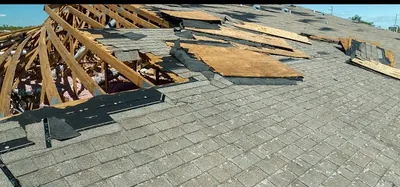
Roof Insurance Claims across Missouri, Kansas, Illinois, Indiana and Kentucky
John Beal Roofing has handled roof insurance claim work for Midwest families for decades. We are family-owned, BBB Torch Award recognized, and every installation carries a lifetime workmanship warranty. Someone answers the phone 24 hours a day — nights, weekends and holidays included, which is exactly when roofs decide to fail.
Every inspection is free, photographed slope by slope, and written up with an itemized price whether or not you hire us. Pick your city below for the local crew, the local storm history and the direct line to the office that covers you.
Does my roof damage qualify for a claim?
Homeowners policies cover sudden, accidental damage from a specific event — hail, wind, a fallen tree, storm debris. They do not cover wear, age or deferred maintenance. That single distinction decides nearly every roof claim.
What usually qualifies: hail bruising and granule loss across slopes, creased or torn shingles from a wind event, shingles blown off, impact damage from debris, and the collateral damage that comes with it — dented gutters, downspouts, vents, flashing, siding, window screens and AC condenser fins. What usually does not: shingles that are simply worn out, a roof at the end of its service life, leaks from a long-neglected flashing detail, and damage that has been left open to the weather for months.
The gray area is bigger than most homeowners think, which is why documentation matters. A free inspection tells you which side of the line your roof is actually on before you file anything.
How a roof insurance claim runs, step by step
- Free inspection. We get on the roof and in the attic, photograph every damaged slope, and document the collateral damage on gutters, siding, vents and screens.
- You decide whether to file. If the damage does not rise above your deductible, we say so — filing a claim you cannot win is not in your interest.
- You file with your carrier and get a claim number. Note the date of loss; carriers care about it.
- The carrier assigns an adjuster and schedules an inspection, usually within days to a couple of weeks depending on how many homes the storm hit.
- We meet the adjuster on your roof. This is the most important hour of the claim — damage that nobody points out is damage nobody pays for.
- The carrier issues a scope and estimate, with a first check for the actual cash value.
- Scope review. We compare their line items against what the roof actually needs and submit documentation for anything missing — a supplement.
- Work is scheduled and completed, with permits pulled and code items handled.
- Final invoice and paperwork go to the carrier, and the held-back depreciation is released.
- You pay your deductible and nothing beyond what is documented in writing.
ACV, RCV, depreciation and your deductible
These four terms cause most of the confusion on a roof claim, and they are simpler than they sound.
Replacement Cost Value (RCV) is what it costs to put the roof back new today. Actual Cash Value (ACV) is that number minus depreciation — the value the roof has already used up through age. Your deductible is the portion you are responsible for.
On a replacement-cost policy, the carrier typically pays in two parts: an ACV check up front, then the withheld depreciation (the recoverable depreciation) after the work is completed and invoiced. So a roof with an RCV of $18,000, $6,000 of depreciation and a $2,500 deductible pays roughly $9,500 first, with the remaining $6,000 released on completion. On an actual cash value policy there is no second check — you receive the depreciated amount only, and the gap is yours. Check which kind of policy you have before a storm, not after.
What a public adjuster does — and what we do
We are your roofing contractor, not your insurance adjuster, and the distinction matters legally. We do not adjust, negotiate or settle your claim on your behalf, and any contractor telling you they will handle your claim for you is describing something they are not licensed to do in most states.
What we do, on every claim: inspect and photograph the damage, give you a written itemized scope of what the roof actually needs, meet your adjuster on the roof so nothing gets missed, supply documentation and manufacturer requirements for anything the carrier's scope leaves out, handle the permits and the code items, and do the work correctly so the final invoice supports release of your depreciation. You remain the policyholder and every decision stays yours.
Hail damage: what adjusters look for
Hail does not leave neat holes. On asphalt shingles it leaves bruises — soft, granule-stripped impact marks where the mat underneath has fractured. Press one and it gives like a bruise on fruit. From the ground they are invisible, which is why hail claims get denied on driveway inspections.
Adjusters also read the soft metals, because those tell the storm's story: dents on gutters, downspouts, roof vents, flashing, AC condenser fins, mailboxes and window screens. Random directional pattern, consistent with the storm's angle, and matching impacts on multiple slopes all support the claim. Most carriers evaluate hail on a test-square basis — a marked 10-by-10 area per slope — and count impacts against a threshold. Documenting every slope is how the whole roof gets scoped instead of one section.
Wind damage: the failure nobody sees
Wind damage is the most commonly missed roof claim, because the shingle usually stays on the roof. A gust lifts the shingle, breaks the factory seal bond, and it lays back down looking untouched — but it is now a loose flap that will take water in the next storm and blow off in the one after. Lift it by hand and it moves freely; a sealed shingle resists.
The signs: creased shingles with a horizontal fracture line, lifted or unsealed tabs, missing tabs along rakes and ridges, displaced ridge caps, damaged drip edge, and granules in the gutters. Straight-line winds are a routine Midwest summer event and they qualify as a covered peril just as hail does.
Code upgrades, supplements and what they mean for you
Two things routinely go missing from a carrier's first estimate. Code upgrades are items current building code requires that your old roof never had — ice-and-water barrier at the eaves, a ventilation minimum, drip edge, a second layer of underlayment in some jurisdictions. Many policies include ordinance or law coverage that pays for them, but only when someone documents that the local code requires them.
A supplement is a request to add items the original scope left out: steep or high charges, decking replacement that only appeared after tear-off, additional flashing, ridge vent, or a second layer of tear-off. Supplements are ordinary, expected and documented with photographs and manufacturer requirements — not a negotiation tactic. Handled properly, they are the difference between a roof that is scoped correctly and one you end up paying the gap on.
If your claim gets denied or underpaid
A denial is not always the end. The common reasons are a missed inspection window, damage attributed to wear rather than the storm, damage below deductible, or an inspection that simply did not find what was there.
Your options, in order: request the full scope and the adjuster's report in writing; request a re-inspection, which carriers grant routinely when new documentation exists; supply that documentation — dated photographs, the storm report for your date of loss, a written contractor scope; ask for a different adjuster or a reinspection with an engineer if the dispute is technical; and if it still stalls, your policy likely includes an appraisal clause, and your state insurance department takes complaints. A licensed public adjuster or an attorney represents policyholders in disputes — that is their role, not a roofer's.
What not to do: let the deadline pass. Most policies require prompt notice, and many carriers apply a one- or two-year window from the date of loss for hail and wind.
Deadlines, dates of loss and why timing matters
Every roof claim turns on a date of loss — the specific storm that caused the damage. Carriers cross-check it against weather data, so "sometime last spring" is a weak claim and "the hailstorm on the evening of April 28" is a strong one. If you are not sure which storm did it, the reports for your ZIP code will usually tell you.
Timing cuts three ways. Policies require prompt notice after discovery. Most carriers apply a filing window, commonly one to two years from the date of loss. And damage left open to the weather becomes harder to separate from neglect the longer it sits, which is precisely the argument used to reduce a claim. Getting the roof documented early costs nothing and protects the claim.
Storm chasers, deductible schemes and red flags
Every hailstorm brings out-of-state crews who knock doors for a week and disappear. The offers to walk away from:
- "We'll cover your deductible" or "we'll eat the deductible." Misrepresenting a deductible is insurance fraud in most states, and it puts the policyholder at risk too, not just the contractor.
- Pressure to sign before the adjuster has been out, or a "storm contingency agreement" you are told is not a contract.
- No local address, no license number, no certificate of insurance.
- Cash up front, or a demand for the full claim check before work starts.
- An offer to inspect your roof and "find" damage, or to file the claim on your behalf.
- A price that only holds if you decide today.
A workmanship warranty is only as good as the company still standing behind it. Ask who installs the roof, and who answers the phone next February.
What we bring to a claim in every market
We have handled storm claims in this region since 1947, through some of the worst hail and wind events the Midwest has produced, and we do it with our own in-house crews rather than subcontracted labor. Practically, that means: a free documented inspection with photographs, a written itemized scope you can hand to any adjuster, a representative on the roof at the adjuster's inspection, permits and code items handled, and a lifetime workmanship warranty on the completed roof.
We are licensed and insured (License # 104.011957/105.007037), BBB Accredited, a BBB Torch Award for Ethics recipient, family-owned through three generations, with more than 50,000 satisfied customers in ten local markets across Missouri, Kansas, Illinois, Indiana and Kentucky — and a 24/7 line that a person answers.
Documents and photos to keep
- Your policy declarations page — deductible, and whether coverage is RCV or ACV
- Claim number, adjuster name and direct phone
- The date of loss and, ideally, the storm report for your ZIP code
- Dated photographs of every damaged area, inside and out, before anything is repaired
- Receipts for emergency measures — tarping, water extraction — which are frequently reimbursable
- The carrier's full scope and estimate, not just the check stub
- Your contractor's written itemized scope
- The final invoice and warranty paperwork, which you will want when you sell the house
Will filing a claim raise my rates?
We are roofers, not your agent, so the honest answer is: ask your agent about your specific policy and history. What is generally true is that weather claims are treated differently from liability or at-fault claims, and a single storm claim in a region where an entire ZIP code filed after the same hail event is a different profile from repeated claims. Regional rate adjustments after major storms tend to affect everyone in the area regardless of whether they filed.
What we can tell you plainly: paying out of pocket for genuine storm damage does not protect your rates, and letting documented damage sit unrepaired can create a coverage problem of its own at renewal or at the next inspection.
Roof insurance claim questions, answered
Tap any question to open it.
Does insurance cover a roof replacement?
If sudden, accidental damage from a covered peril — hail, wind, fallen tree, storm debris — caused it, generally yes. Wear, age and deferred maintenance are not covered. A free documented inspection tells you which side of that line your roof is on before you file.
How do I know if my roof has hail damage?
Hail leaves bruised, granule-stripped impact marks that give under thumb pressure, usually invisible from the ground, along with dents on gutters, downspouts, vents, flashing, AC fins and window screens. If a hailstorm hit your ZIP code, get the roof documented even if nothing is leaking.
What does wind damage look like on a roof?
Creased shingles with a horizontal fracture line, tabs that lift freely by hand because the seal bond broke, missing tabs along rakes and ridges, displaced ridge caps, damaged drip edge and granules in the gutters. The shingle often stays on the roof, which is why wind damage is the most commonly missed claim.
How long do I have to file a roof insurance claim?
Policies require prompt notice after you discover damage, and most carriers apply a filing window commonly one to two years from the date of loss. Check your own policy — and do not wait, because damage left open to the weather gets harder to separate from neglect.
What is the difference between ACV and RCV?
Replacement Cost Value is what it costs to replace the roof new today. Actual Cash Value is that figure minus depreciation for the life the roof already used. On a replacement-cost policy the carrier pays ACV first and releases the withheld depreciation after the work is completed and invoiced. On an ACV policy there is no second check.
What is recoverable depreciation?
The amount the carrier held back from the first check. Once the work is completed and the final invoice is submitted, that money is released to you. It is the reason the first check rarely covers the whole roof, and it is not the carrier underpaying.
Do I have to pay my deductible?
Yes. The deductible is your share of the loss and it is stated on your policy. Any contractor offering to cover, waive or absorb it is describing insurance fraud in most states, and the exposure falls on the policyholder too, not only the contractor.
Will you meet my insurance adjuster at my house?
Yes, on every claim we handle. We meet the adjuster on the roof with our documentation, because damage nobody points out is damage nobody pays for. That inspection is the most important hour of the claim.
Do you handle the insurance claim for me?
We are your roofing contractor, not your adjuster, and we do not adjust, negotiate or settle the claim on your behalf — that requires a license we do not hold. We inspect and document the damage, give you a written itemized scope, meet your adjuster, and supply documentation for anything the carrier's scope leaves out. Every decision stays yours.
What is a supplement on a roof claim?
A documented request to add items the carrier's original scope left out — steep or high charges, decking that only appeared after tear-off, additional flashing, ridge vent, a second layer of tear-off. Supplements are ordinary and expected, submitted with photographs and manufacturer requirements.
What are code upgrades and will insurance pay for them?
Items current building code requires that your old roof never had — ice-and-water barrier at the eaves, ventilation minimums, drip edge. Many policies include ordinance or law coverage that pays for them, but only when someone documents that local code requires them.
My claim was denied. What can I do?
Request the full scope and adjuster's report in writing, then request a re-inspection with new documentation — dated photographs, the storm report for your date of loss, a written contractor scope. If it still stalls, your policy likely includes an appraisal clause, and your state insurance department takes complaints. A licensed public adjuster or an attorney represents policyholders in disputes.
Can I get a new roof if my claim only pays for repairs?
Sometimes. If the damage is widespread enough, or if repairs cannot be made without violating manufacturer requirements or matching discontinued material, that supports a full replacement — and it is documented rather than argued. If the honest answer is that a repair is the correct scope, we will tell you that.
Should I file a claim for a small amount of damage?
Not always. If the damage does not rise above your deductible, filing gains you nothing. We will tell you when that is the case rather than pushing a claim you cannot win.
Will filing a claim raise my insurance rates?
Ask your agent about your specific policy and history. Weather claims are generally treated differently from at-fault claims, and after a major storm regional adjustments tend to affect everyone in the area regardless of who filed. Paying out of pocket for genuine storm damage does not protect your rates.
Who chooses the contractor — me or my insurance company?
You do. A carrier may suggest a preferred vendor, but the choice of who works on your home is yours, and so is the workmanship warranty that comes with it.
Can I keep the insurance money and not replace the roof?
On a replacement-cost policy, no — the withheld depreciation is only released when the work is completed and invoiced. Beyond that, unrepaired documented damage can create a coverage problem at renewal or at the next inspection.
How long does a roof insurance claim take?
Typically a few weeks from filing to the first check, depending on how many homes the storm hit and how quickly an adjuster can be scheduled. The work itself is usually one to two days once materials and permits are in place, and depreciation is released after the final invoice.
Do I need a police report or storm report?
Not a police report, but the weather report for your date of loss is useful. Carriers cross-check the date against storm data, so a specific date of loss makes a much stronger claim than an approximate season.
Is emergency tarping covered by insurance?
Emergency measures to prevent further damage are frequently reimbursable — keep the receipts. Stopping the water is the priority and it protects the claim, because most interior damage happens in the hours after a storm.
What documents should I keep for my roof claim?
Your policy declarations page, claim number and adjuster contact, the date of loss, dated photographs of all damage before repairs, receipts for emergency measures, the carrier's full scope and estimate, your contractor's written scope, and the final invoice and warranty paperwork.
Which areas do you serve for roof insurance claims?
500+ cities across Missouri, Kansas, Illinois, Indiana and Kentucky from ten local offices: St. Louis, Kansas City, Indianapolis, Springfield, Columbia / Jefferson City, Lake of the Ozarks, and Carbondale / Southern Illinois. Emergency service is answered 24 hours a day, every day.
Every city we cover — all 143
St. Louis — (314) 429-6000
St. Louis, MOO'Fallon, MOSt. Charles, MOSt. Peters, MOFlorissant, MOWentzville, MOChesterfield, MOBelleville, ILWildwood, MOUniversity City, MOO'Fallon, ILBallwin, MOKirkwood, MOMaryland Heights, MOGranite City, ILEdwardsville, ILAlton, ILHazelwood, MOWebster Groves, MOArnold, MO
Kansas City — (816) 572-9500
Kansas City, MOOverland Park, KSKansas City, KSOlathe, KSIndependence, MOLee's Summit, MOShawnee, KSBlue Springs, MOLenexa, KSLeavenworth, KSLeawood, KSLiberty, MORaytown, MOGladstone, MOGrandview, MORaymore, MOBelton, MOGardner, KSPrairie Village, KSGrain Valley, MO
Indianapolis — (317) 726-6000
Indianapolis, INCarmel, INFishers, INAnderson, INNoblesville, INGreenwood, INLawrence, INWestfield, INPlainfield, INFranklin, INBrownsburg, INGreenfield, INShelbyville, INLebanon, INBeech Grove, INZionsville, INAvon, INMartinsville, INSpeedway, INGreencastle, IN
Springfield — (417) 429-1927
Springfield, MONixa, MOOzark, MORepublic, MOBranson, MOBolivar, MOMonett, MOMarshfield, MOAurora, MOWillard, MOBattlefield, MORogersville, MOMount Vernon, MOHollister, MOBuffalo, MOClever, MOStrafford, MOForsyth, MOKimberling City, MOMarionville, MO
Columbia / Jefferson City — (573) 343-8993
Columbia, MOJefferson City, MOMoberly, MOFulton, MOMexico, MOBoonville, MOAshland, MOHolts Summit, MOCentralia, MOCalifornia, MOVandalia, MOFayette, MOTipton, MOHallsville, MOWardsville, MOLinn, MOBelle, MOHuntsville, MOSt. Martins, MOTaos, MO
Lake of the Ozarks — (573) 343-8993
Lebanon, MOOsage Beach, MOEldon, MOCamdenton, MOVersailles, MOVillage of Four Seasons, MOWarsaw, MOLake Ozark, MORichland, MOLincoln, MOCole Camp, MOLaurie, MOStover, MOConway, MOIberia, MOSunrise Beach, MOSt. Elizabeth, MOLinn Creek, MOStoutland, MOTuscumbia, MO
Carbondale / Southern Illinois — (618) 549-0800
Carbondale, ILMarion, ILMount Vernon, ILHerrin, ILHarrisburg, ILSalem, ILWest Frankfort, ILMurphysboro, ILChester, ILBenton, ILMetropolis, ILCarterville, ILDu Quoin, ILPinckneyville, ILFairfield, ILCarmi, ILAnna, ILSparta, ILRed Bud, ILEldorado, IL
The Best Value Guarantee
Bring us a qualifying written estimate from a qualifying contractor and we will compare it against ours. If we can match or improve the value, you agree to let us do the work. If we decide not to match or improve it, we refund your deposit and pay you an additional $200 — in writing. When Mother Nature's at her worst, we're at our best.