
Home › Commercial Roofing › Built-up roofing — the original multi-ply roof, and what to do with yours
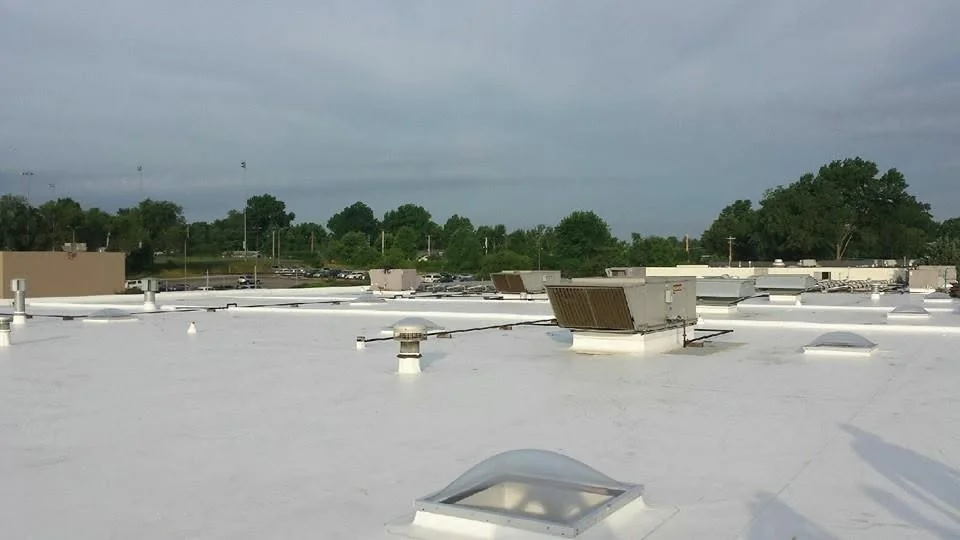
Built-up roofing — the original multi-ply roof, and what to do with yours
Built-up roofing is the oldest commercial system still in wide service, and if your building was put up before about 1990 there is a good chance it started life with one — layers of hot bitumen and reinforcing felt, topped with gravel. We have been working on these roofs since 1947, which matters, because BUR is the one system where most of the calls are about a roof that is already decades old and the real question is not what to install, it is what this roof still has left.
What a built-up roof actually is
BUR is a laminated assembly: a base sheet, then alternating layers of hot bitumen (asphalt or, on older roofs, coal tar) and reinforcing ply sheets — organic felt on older roofs, fiberglass on newer — usually three or four plies, then a surfacing. It is genuinely built up on the roof, ply by ply, which is where the name comes from and why a good BUR roof is so redundant: water has to breach several independent layers to reach the deck.
Three surfacings:
- Gravel or slag flood coat — the classic tar-and-gravel roof. The aggregate shields the bitumen from UV and adds hail protection, and it hides the membrane from inspection, which is the trade-off.
- Mineral cap sheet — a granulated sheet as the top ply, walkable and inspectable.
- Reflective coating — a smooth-surfaced BUR finished with an aluminized or elastomeric coating, renewable on a cycle.
Coal-tar pitch roofs deserve special mention: they are extraordinarily water-resistant and some are still performing after fifty years. They also require different handling and different materials than asphalt, so identifying which you have comes before anyone proposes work.
Do I repair, restore or replace my BUR roof?
This is the only question most BUR owners actually need answered, and it should be answered with evidence rather than a sales pitch.
Repair when the plies are sound, the insulation is dry, and the problems are local — blisters, splits, flashing failures, bare spots in the flood coat. A gravel roof with isolated defects and a dry assembly can often run years more on maintenance alone.
Restore when the surfacing is spent but the plies beneath are intact and the insulation is dry. On a smooth or cap-sheet BUR, a reflective coating system renews the surface, cuts heat load and buys years, usually as a maintenance expense. Gravel roofs need the aggregate addressed before any coating — often the honest answer there is that coating is not practical.
Replace when core cuts and an infrared or moisture survey show wet insulation across a meaningful area, when the plies are broadly brittle and alligatored, when splits recur along the same lines, or when the steel or wood deck below has corroded or rotted. Old BUR roofs also frequently hide a second problem: no real insulation by modern standards, and no positive slope. A tear-off is the only chance to fix both.
We take core cuts, scan for moisture, and show you photographs of what is actually in your roof before recommending anything.
Why BUR roofs fail, in order of what we actually find
- Blisters — voids between plies from moisture or poor interply bonding, expanding with heat until one breaks open.
- Splits — usually over insulation joints, at deck movement lines, or where the assembly has lost flexibility with age.
- Alligatoring — the hardened, cracked crocodile-skin pattern of UV-oxidized bitumen on a surface that lost its protection.
- Bare spots in the flood coat where gravel has migrated, scoured by wind or washed toward drains.
- Failed flashings at parapets, curbs, pipes and pitch pockets — the single most common actual leak source.
- Ponding water from an assembly built with no positive slope, which was common practice for decades.
- Wet insulation spreading laterally from an old, small, unrepaired leak.
- Deck deterioration — rusted steel or rotted wood decking under long-term saturation, which turns a roof project into a structural one.
Hail, wind and insurance on an old BUR roof
Wind damage shows up at edges and corners: gravel scoured away, lifted membrane at terminations, failed edge metal and coping, and blisters opened by uplift.
Two things to know about claims on a roof this old. Carriers frequently argue that a forty-year-old roof has no remaining value, and documentation of its actual condition before the storm is the best counter — which is one more reason to have an inspection file. And many commercial policies carry percentage deductibles, cosmetic exclusions or actual-cash-value settlement on roofs past a certain age. We document thoroughly, photograph everything and meet your adjuster at the building. See storm damage and roof insurance claims.
What replaces a BUR roof when it is time
- Modified bitumen — the closest successor, multi-ply and redundant, with the same toughness under foot traffic and far easier installation. The natural choice for an owner who liked what BUR did for them.
- TPO — reflective, welded, economical, and the common answer on large open roofs.
- EPDM — rubber, with the longest proven record in this climate and excellent cold performance.
- PVC — where grease, chemicals or fire exposure are part of the building's reality.
- Spray polyurethane foam — where the real problem is ponding and poor insulation, since foam can be built to create slope.
Whatever goes on top, a tear-off is the moment to fix the two things the original roof probably got wrong: insulation value and positive drainage.
Maintenance for a roof that is already old
The economics of an aging BUR roof are almost entirely about maintenance. Every year you extend it is a year of capital you do not spend, and the failures that end these roofs — a small unrepaired leak saturating insulation laterally for a decade — are exactly the failures an inspection catches early.
Two visits a year plus post-storm checks: drains and scuppers cleared, gravel redistributed over bare spots, blisters and splits mapped and tracked over time, flashings and pitch pockets examined, parapet and coping condition checked, debris removed, minor repairs made on the spot, and a photographic report filed each visit — which is also the document that protects you in a claim on a roof a carrier will call old.
Getting the work done on an occupied building
BUR tear-offs are the most disruptive job in commercial roofing: heavy, dirty, and loud, with gravel and old asphalt to remove before anything new goes on. Planning is most of the job.
We phase work section by section so the building stays operational and dried in each night, plan staging and crane or conveyor placement around your parking and deliveries, schedule noisy demolition around your hours where we can, protect landscaping and entries, and specify low-odor or self-adhered systems near occupied and sensitive spaces. On schools we work summers and breaks; on medical and food service we work nights and early mornings; on warehouses we work around dock schedules.
Old low-slope buildings across our markets
There is a great deal of it around St. Louis and through Metro East and Southern Illinois, plenty in Kansas City and Indianapolis, institutional and state buildings through Columbia and Jefferson City, older commercial cores in Springfield, and aging resort, retail and condominium buildings at the Lake of the Ozarks. Call the office nearest the building and we will take a look, take cores, and tell you what your roof actually has left.
Our seven local markets — 143 cities
We install and service built-up roofs from seven local offices covering 143 cities in Missouri, Kansas, Illinois and Indiana. Each market runs its own crews and its own number — call the office nearest the building.
Questions, answered
Tap any question to open it.
What is built-up roofing?
Built-up roofing, or BUR, is the original multi-ply low-slope system: alternating layers of hot bitumen and reinforcing ply sheets — typically three or four plies — surfaced with gravel, a mineral cap sheet or a reflective coating. It is literally built up on the roof ply by ply, which is what makes it so redundant.
Is a tar and gravel roof the same thing?
Yes. A tar-and-gravel roof is built-up roofing surfaced with a bitumen flood coat and gravel or slag. The aggregate shields the membrane from ultraviolet light and adds hail protection, and it also hides the membrane from inspection, which is the trade-off.
How long does a built-up roof last?
Commonly 20 to 30 years, and many in this region have run far longer with maintenance — we service BUR roofs that are 40 and 50 years old. Coal-tar pitch roofs in particular are extremely durable. Drainage, flashing condition and whether small leaks were repaired promptly decide it.
My BUR roof is 40 years old. Does it have to be replaced?
Not automatically, and we will not tell you otherwise without evidence. If the plies are sound and core cuts and a moisture survey show dry insulation, an old BUR roof can often be repaired and maintained for years. Replacement is the answer when insulation is wet over a meaningful area, plies are brittle and alligatored, splits keep recurring, or the deck has deteriorated.
What causes blisters on a built-up roof?
Voids between plies, from moisture trapped during installation or an incomplete bond between layers. Heat expands them over time. An intact blister can often be monitored; one that has broken open is a leak path and gets cut out, dried and rebuilt in plies.
What does alligatoring mean?
The hardened, cracked, crocodile-skin pattern that forms when bitumen is oxidized by ultraviolet light after losing its protective surfacing. Localized alligatoring can be repaired and coated; when it covers the roof, the membrane has lost its flexibility and replacement is usually the honest answer.
Can a built-up roof be coated instead of replaced?
On a smooth-surfaced or cap-sheet BUR with sound plies and dry insulation, yes — a reflective coating renews the surface, lowers heat load and buys years, often as a maintenance expense. On a gravel-surfaced roof the aggregate has to be dealt with first, and frequently coating is not practical there.
Why does my flat roof hold water?
Because a great many older low-slope roofs were built with little or no positive slope, and decades of settlement made it worse. Standing water 48 hours after rain shortens the life of any system, adds structural load and grows vegetation. Tapered insulation, added drains or a spray foam system can build the slope the roof never had.
What should I replace a built-up roof with?
Usually modified bitumen if you want the same multi-ply redundancy and toughness, TPO on a large open roof where reflectivity and cost matter, EPDM for proven cold-climate performance, PVC where grease or chemicals are present, or spray foam where ponding and poor insulation are the real problems. A tear-off is also the moment to correct insulation and slope.
Can you install a new roof over my BUR roof?
Sometimes, but most jurisdictions allow only two roof layers, and many older BUR roofs already carry a second system on top. An overlay also requires a dry assembly and a sound deck — recovering wet insulation just seals the problem in.
Will my insurance company say my old roof has no value?
Carriers do argue that on aging roofs, and some commercial policies settle on actual cash value or carry cosmetic exclusions past a certain age. The best counter is documentation of the roof's real pre-storm condition, which is one more reason to keep an inspection file. We document damage thoroughly and meet your adjuster at the building.
How disruptive is a BUR tear-off?
It is the heaviest, dirtiest job in commercial roofing — old gravel and asphalt have to come off before anything new goes on. We phase the work so the building stays operational and dried in each night, plan staging around parking and deliveries, and schedule demolition around your hours: summers on schools, nights on medical and food service, dock schedules on warehouses.
Do you offer maintenance for older built-up roofs?
Yes, and it is the highest-value thing you can do with an aging BUR roof: two visits a year plus post-storm checks, drains cleared, gravel redistributed over bare spots, blisters and splits mapped and tracked, flashings and pitch pockets examined, minor repairs on the spot, and a photographic report each visit.
Where do you service built-up roofs?
143 cities across Missouri, Kansas, Illinois and Indiana from seven local offices: St. Louis, Kansas City, Indianapolis, Springfield, Columbia and Jefferson City, the Lake of the Ozarks, and Metro East and Southern Illinois.
Other commercial systems we install
Back to commercial & specialty roofing, or see property management, storm damage and roof insurance claims.
Where we work
The Best Value Guarantee
Bring us a qualifying written estimate from a qualifying contractor and we will compare it against ours. If we can match or improve the value, you agree to let us do the work. If we decide not to match or improve it, we refund your deposit and pay you an additional $200 — in writing.