
Home › Commercial Roofing › Commercial metal roofing — standing seam, panel retrofits and the fastener problem
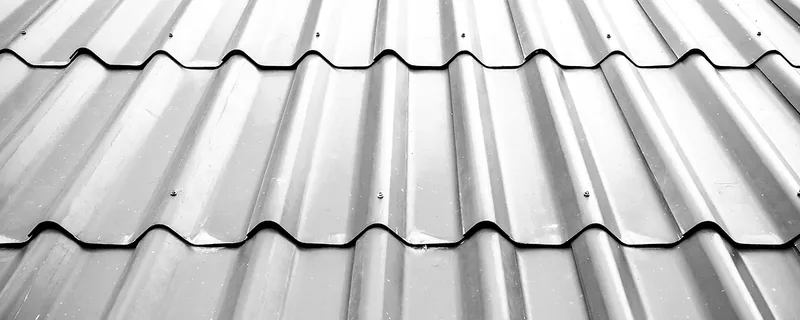
Commercial metal roofing — standing seam, panel retrofits and the fastener problem
Metal is the longest-lived commercial roof available and the most misunderstood. A properly detailed standing seam roof can outlast two membrane roofs. An exposed-fastener panel roof on the same building can start leaking in year twelve at every screw — not because metal failed, but because thermal movement and rubber washers did. Nearly every metal roof call we take is really a question about fasteners, seams, or penetrations, and almost none of them require tearing the roof off.
Standing seam vs. exposed fastener — the distinction that decides everything
Two families of metal roof, and they age completely differently.
- Standing seam (concealed fastener) — panels are attached with clips hidden inside a raised, interlocking seam, so no fastener penetrates the water plane. Clips allow the panel to expand and contract freely, which matters enormously in a climate that swings 100-plus degrees across a year. Seams are either mechanically seamed (folded closed with a machine) or snap-lock. This is the premium system and the one worth specifying on new work.
- Exposed fastener (R-panel, corrugated, PBR) — panels are screwed straight through the metal into purlins or deck, with a rubber washer under each screw head sealing the hole. Economical, fast, and extremely common on industrial, agricultural and light commercial buildings across this region.
The exposed-fastener trade-off is arithmetic: a 20,000 square foot panel roof can carry thousands of screws, every one of them a hole in the roof sealed by a rubber washer that hardens with UV exposure and works loose with thermal cycling. Metal expands and contracts daily; the screw does not move with it. Over a decade, washers crack and screws back out. That is the whole story of most metal roof leaks, and it is why a screw-down roof needs a fastener program and a standing seam roof does not.
The fastener retrofit — fixing a screw-down roof without replacing it
When a panel roof is leaking at screws across the whole field, the owner is usually told to replace it. There are almost always two cheaper answers first.
Fastener replacement. Every existing screw is replaced with a larger-diameter oversize fastener with a new EPDM-backed washer, seated into sound metal. Because the new screw is bigger, it bites fresh material rather than the stripped hole. On a roof whose panels are still sound, this addresses the leak source directly and buys years for a fraction of replacement cost.
Coating restoration. The roof is cleaned, rust treated, fasteners replaced, seams and penetrations reinforced with fabric and mastic, and the whole surface coated with a silicone or acrylic system — producing a seamless, reflective, monolithic surface over the existing panels. See coatings and restoration.
Standing seam retrofit. The bigger move: a sub-purlin framing system installed over the existing panels, then a new standing seam roof over that, often with insulation added in the cavity. The building keeps operating, the old roof stays as a temporary deck, there is no tear-off and no interior exposure, and the result is a concealed-fastener roof with the fastener problem permanently gone. On a building that pools water at panel laps or has structural slope problems, this also builds in new slope.
Where metal roofs actually leak
- Backed-out fasteners and failed washers — the dominant cause on every exposed-fastener roof.
- Panel end laps and side laps, where sealant tape has aged out or laps were never properly closed.
- Penetrations — pipes, curbs, conduit and equipment supports added later by other trades, frequently with caulk instead of a proper boot or curb.
- Pitch changes, transitions and eave details, where flashing was cut short or fabricated wrong.
- Ridge and hip closures with degraded foam closure strips.
- Gutters, valleys and internal gutter systems that overflow back under the panel.
- Fastened seams on snap-lock panels that unclipped under uplift.
- Rust and perforation at panel bottoms, standing-water areas and cut edges where the coating was breached.
- Restricted thermal movement — a panel pinned at both ends by a later penetration or a mis-set clip will oil-can, distort, and eventually tear the metal at the restraint.
Notice what is not on this list: the metal itself failing across the field. That is why metal is so often a repair-or-restore candidate rather than a replacement.
Hail, wind and metal roof claims
Metal presents a claim problem no other system has: hail on metal is usually cosmetic in function and obvious in appearance. Dents do not necessarily compromise the roof's ability to shed water, and carriers know it — which is why many commercial policies on metal buildings carry explicit cosmetic damage exclusions or endorsements. A dented but functional panel roof can be a denied claim even when the dents are severe and visible.
Where a metal hail claim does have legs: punctures or fractured coating that will rust, damage to seams and clips that compromises the water plane, dented and crushed gutters, downspouts, vents, curbs and equipment, and damage to closures and flashings. Wind claims are usually stronger — panel uplift, peeled edges, unclipped seams, blown ridge caps and displaced flashing are functional failures.
We document with dated photographs, test areas, measured dent density where relevant, and corroborating damage elsewhere on the property, and we read your policy's exclusions before telling you a claim is worth filing. We will say plainly when it is not. See storm damage and roof insurance claims.
Metal roof coatings and restoration
Metal is the best coating substrate in commercial roofing, because the failure modes coatings fix — fasteners, laps, surface corrosion, reflectivity — are exactly the failure modes metal has.
A proper restoration is a sequence, not a paint job: pressure clean and degrease, treat and prime rust, replace or reseat every fastener, reinforce seams and laps with fabric and mastic, flash penetrations properly, then apply the coating system at specified thickness. Silicone is the common choice here for UV and ponding resistance; acrylic is economical and highly reflective; urethane takes foot traffic better.
Done right it renews the roof, cuts surface temperature substantially, stops active leaks, and is frequently treated as maintenance rather than capital expense. Done as a coat of paint over rust and loose screws, it hides the problem for two years. The preparation is the job and it is where the cost difference between bids usually lives.
Insulation, condensation and metal buildings
Metal buildings have a problem membrane roofs do not: condensation. Metal conducts heat readily, so on a cold night the underside of an uninsulated panel drops below the dew point of the air inside and water forms on it — then drips. Owners report this as a leak, and crews chase it for weeks, because it happens when it is not even raining.
The tells: moisture appearing on cold clear nights rather than during rain, drips distributed across the field rather than at a specific detail, and wet spots that correlate with purlin lines. The fixes are insulation and a vapor retarder, ventilation, or foam applied to the underside — and in a retrofit, insulation in the new sub-purlin cavity, which is one of the quiet advantages of a standing seam retrofit.
Uninsulated or under-insulated metal buildings are common across this region in warehouse, agricultural, manufacturing and self-storage stock, and a re-roof or retrofit is the only practical moment to correct it.
Architectural, steep-slope and specialty metal
Beyond low-slope panel work: standing seam on steep-slope roofs and residential-scale commercial buildings, metal mansards, canopies and entry features on retail and restaurant property, copper and specialty metal on churches, historic buildings, steeples, bay windows and finials, metal shingles and stone-coated steel, and custom-fabricated flashing, coping, gutters and edge metal.
Specialty metal is a fabrication skill as much as an installation one, and it is where the difference between crews is most visible. Historic and church work in particular is unforgiving — see commercial and specialty roofing for the churches, steeples, slate, tile and copper side of what we do.
Metal buildings across our markets
Warehouses and distribution, manufacturing and industrial plants, agricultural and equipment buildings, self-storage, auto and truck facilities, retail and restaurant canopies, schools and municipal buildings, churches, and pre-engineered metal buildings of every description.
Industrial and distribution metal is heavy around St. Louis, Kansas City and Indianapolis; agricultural, equipment and light industrial metal buildings dominate around Springfield, Columbia and Jefferson City and across Metro East and Southern Illinois; and standing seam on commercial, hospitality and higher-end property leads at the Lake of the Ozarks.
Our seven local markets — 143 cities
We install and service commercial metal roofs from seven local offices covering 143 cities in Missouri, Kansas, Illinois and Indiana. Each market runs its own crews and its own number — call the office nearest the building.
Questions, answered
Tap any question to open it.
How long does a commercial metal roof last?
A properly detailed standing seam roof commonly runs 40 to 60 years or more, since no fastener penetrates the water plane and panels move freely with temperature. An exposed-fastener panel roof typically needs fastener attention around year 12 to 20 and, maintained or restored, can serve just as long overall.
What is the difference between standing seam and exposed fastener metal?
Standing seam hides its fasteners inside a raised interlocking seam, using clips that let panels expand and contract — nothing penetrates the water plane. Exposed-fastener panels (R-panel, corrugated, PBR) are screwed straight through the metal with a rubber washer sealing each hole. Standing seam costs more and lasts materially longer.
Why is my metal roof leaking at the screws?
Because metal expands and contracts daily and the screw does not move with it, while the rubber washer under the screw head hardens from UV exposure. Over a decade washers crack and screws back out, and a large panel roof has thousands of them. It is the most common metal roof leak by a wide margin.
Can you fix a screw-down metal roof without replacing it?
Almost always, and in two or three escalating ways: replace every fastener with an oversize screw and new EPDM-backed washer that bites fresh metal; or clean, treat rust, reinforce seams and penetrations and coat the whole roof into a seamless surface; or retrofit a new standing seam roof over the existing panels on sub-purlins.
What is a standing seam retrofit?
A sub-purlin framing system is installed over your existing panel roof, then a new standing seam roof over that — often with insulation added in the cavity, and new slope built in where the old roof ponded. The building keeps operating, there is no tear-off and no interior exposure, and the fastener problem is permanently gone.
Will insurance pay for hail dents on my metal roof?
Often not, and you should know this before filing. Dents on metal are frequently cosmetic in function rather than a failure to shed water, and many commercial policies on metal buildings carry explicit cosmetic damage exclusions. Punctures, fractured coating that will rust, compromised seams, and crushed gutters, vents and curbs are a different matter.
Is a wind claim on a metal roof stronger than a hail claim?
Usually yes, because wind damage on metal is functional rather than cosmetic: panel uplift, peeled edges, unclipped seams, blown ridge caps and displaced flashing all compromise the water plane. We document with dated photographs and corroborating damage across the property.
Can you coat a metal roof?
Metal is the best coating substrate in commercial roofing, because coatings fix exactly what metal suffers from — fasteners, laps, surface corrosion and heat gain. The sequence matters: clean and degrease, treat and prime rust, replace fasteners, reinforce seams and penetrations, then coat at specified thickness. Preparation is the job.
Which coating is best for a metal roof?
Silicone is the common choice in this region for ultraviolet and ponding-water resistance. Acrylic is economical and highly reflective. Urethane handles foot traffic better where there is regular rooftop service. Which one fits depends on ponding, traffic and budget — we specify per roof, not per product line.
My metal roof drips when it is not raining. Why?
That is condensation, not a leak. Metal conducts heat, so on a cold clear night the underside of an uninsulated panel falls below the dew point of the air inside and water forms, then drips. Tells: it happens on cold dry nights, drips are spread across the field, and wet spots often line up with purlins. Insulation, a vapor retarder, ventilation or underside foam is the fix.
Does a metal roof make a building hotter or cooler?
Bare metal absorbs and radiates a great deal of heat. A reflective coating or a factory reflective finish changes that substantially, and reflectivity plus real insulation is what actually lowers the load. On an uninsulated metal building, insulation does more than surface color does.
What causes oil canning and waviness in metal panels?
Usually restricted thermal movement — a panel pinned at both ends by a later penetration, a mis-set clip, or fasteners installed too tight. Mild waviness is cosmetic and inherent to light-gauge metal. Severe restraint eventually tears the metal at the restraint point, which is a real failure.
How much does a commercial metal roof cost?
It depends heavily on system: standing seam costs considerably more than exposed-fastener panel, and a retrofit over an existing roof costs less than a tear-off and rebuild. Gauge, finish, panel profile, square footage, insulation, penetrations, custom flashing and access all move the number. The assessment and written itemized scope are free.
Where do you install commercial metal roofing?
143 cities across Missouri, Kansas, Illinois and Indiana from seven local offices: St. Louis, Kansas City, Indianapolis, Springfield, Columbia and Jefferson City, the Lake of the Ozarks, and Metro East and Southern Illinois.
Other commercial systems we install
Back to commercial & specialty roofing, or see property management, storm damage and roof insurance claims.
Where we work
The Best Value Guarantee
Bring us a qualifying written estimate from a qualifying contractor and we will compare it against ours. If we can match or improve the value, you agree to let us do the work. If we decide not to match or improve it, we refund your deposit and pay you an additional $200 — in writing.