
Home › Commercial Roofing › Spray foam roofing — seamless, insulating, and the fix for a roof that ponds
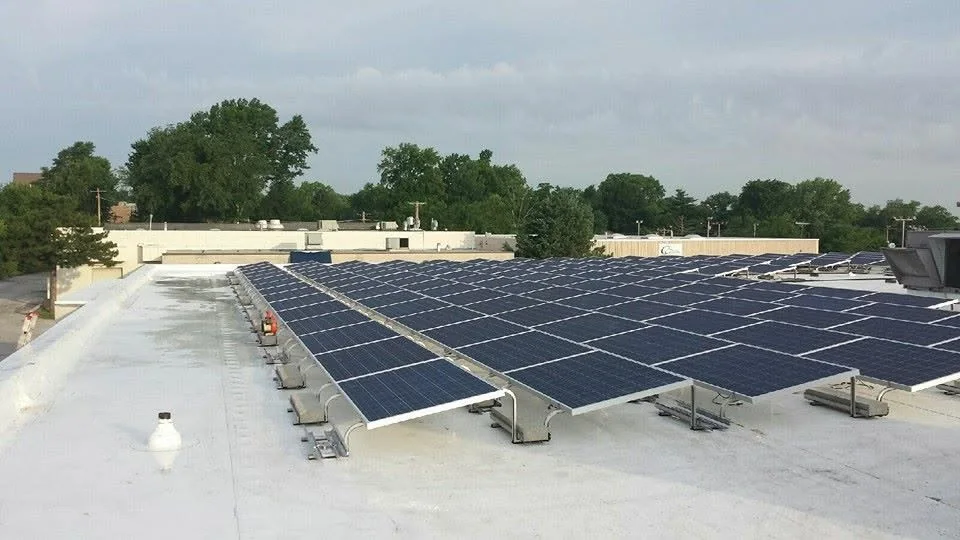
Spray foam roofing — seamless, insulating, and the fix for a roof that ponds
Spray foam is the odd one out among commercial roof systems, and on the right building it is unbeatable. It arrives as a liquid, expands in place, and cures into a single seamless sheet with no laps and no seams — which is worth a great deal, because seams are where nearly every other low-slope system fails. It is also the only system that can be sprayed thicker in the low spots, which means it can fix a roof that ponds without tearing anything off. And it insulates: foam carries one of the highest R-values per inch in commercial construction.
What SPF is and how it goes on
Two liquid components meet at the spray gun, react, and expand roughly thirty-fold into closed-cell polyurethane foam that bonds to the substrate. It is applied in passes, typically one to two inches for a roofing application, and it self-flashes — it sprays up parapets, around curbs and over pipe penetrations as one continuous surface, so those classic leak details simply do not exist as details.
Foam does not tolerate ultraviolet light, so a protective coating is not optional; it is part of the system:
- Silicone — the common choice here. Excellent UV and ponding-water resistance, long service life, holds up in weather.
- Acrylic — economical and highly reflective, less tolerant of standing water.
- Granules are broadcast into the coating on roofs with foot traffic for walkability and impact resistance.
Substrate preparation decides the outcome: the surface must be clean, sound and dry, because foam bonds aggressively to what it is sprayed on and seals in whatever moisture is underneath. Applying foam over wet insulation is the single worst mistake available on this system.
The ponding-water fix nothing else offers
A great many older low-slope roofs in this region were built with little or no positive slope, and after decades of settlement they hold water in the same places after every rain. Standing water 48 hours after rain shortens the life of every system, adds real structural load, breeds vegetation and algae, and can void a manufacturer warranty.
Every other system's answer is tapered insulation, which means a tear-off, or added drains, which means structural and plumbing work. Foam's answer is to spray it thicker in the low areas — building the slope into the roof itself, over the existing assembly, with no tear-off and no structural change. On a roof whose only real defect is that it ponds, this is often the cheapest genuine fix available.
It has to be done deliberately: the low areas are surveyed and marked, foam is built up in passes to establish positive drainage toward drains and scuppers, and the finished surface is verified by flood or observation after rain. Done casually, foam follows the bad slope it was sprayed over.
Energy performance, honestly stated
Closed-cell polyurethane foam has among the highest R-values per inch of any commercial insulation, and it is applied as a continuous layer with no fastener penetrations and no joints — so there is no thermal bridging through plates and screws, and no gaps at board edges. Add a reflective coating on top and you have both a high insulating value and a low-absorption surface.
That combination is why spray foam is often specified on buildings where the roof is the dominant load: single-story big-footprint buildings, refrigerated and cold storage, warehouses, manufacturing. On a building whose existing roof has two inches of old insulation and no real thermal break, adding foam changes the energy picture measurably.
The honest limitation: the savings depend on what you are starting from and on your HVAC load. On a well-insulated building the marginal gain is modest. We would rather size that expectation correctly than sell a utility-bill promise we cannot document.
The recoat cycle — the thing nobody tells you
This is the most important commitment in a spray foam roof, and it is where owners get surprised. The foam itself can last decades. The coating that protects it from ultraviolet light does not — it weathers and thins, and it has to be renewed roughly every 10 to 20 years depending on the coating, its thickness and the exposure.
Recoat on schedule and the roof is effectively renewable: a cleaning and a new coat, and the clock resets. Owners with SPF roofs from the 1980s who have recoated on cycle still have working roofs. Miss the cycle and the sun reaches the foam, which degrades and erodes from the surface down, and a roof that was renewable becomes a replacement.
So an SPF roof is a system with a maintenance obligation attached. We put the recoat interval in writing at installation, track it, and remind you when it is due — and if you are inheriting an existing foam roof, the first thing we will tell you is where you stand in that cycle.
Where foam belongs, and where it does not
Good fits: roofs with chronic ponding and no slope; buildings where energy performance is a priority; roofs with many penetrations and complex geometry, where self-flashing is a genuine advantage; recover projects where a tear-off is undesirable and the assembly is dry; buildings with light structural capacity, since foam is very light; cold storage and refrigerated facilities; and metal roofs that leak at every fastener and seam, where foam over the panels can be an elegant solution.
Poor fits: roofs with wet insulation (which must be removed, not sealed in); buildings with heavy daily foot traffic and dragged equipment, where a granulated cap sheet on modified bitumen takes abuse better; owners who will not commit to the recoat cycle — that is a disqualifier, not a detail; buildings where overspray risk cannot be managed, since foam drifts onto cars and neighboring property on a windy day and does not come off easily; and buildings where a tear-off is needed anyway for deck or code reasons.
Repair, recoat or replace
Repair — punctures and damaged areas are cut out, filled with fresh foam and recoated. Because the surface is seamless, a repair blends into the original and is essentially invisible. Foam is one of the easier systems to repair well.
Recoat — the normal maintenance event. Clean, prepare and recoat the full surface. Do it on schedule and the roof keeps going indefinitely.
Replace — when the coating was missed long enough that the foam has degraded through its depth, when moisture got under the foam and saturated the substrate, or when the deck below has deteriorated. Foam that has eroded from UV exposure can sometimes be scarified and recoated if the loss is shallow; below that, it comes off.
Common problems we are called to: UV degradation from a missed recoat, punctures from foot traffic and dropped tools, hail pitting, and bond failure where foam was sprayed over a damp or dirty substrate.
Hail, wind and insurance on foam roofs
Hail pits spray foam, and the damage is usually shallow and localized rather than catastrophic — the coating and foam absorb impact reasonably well, and a granulated surface improves that further. But pits that penetrate the coating open the foam to ultraviolet light, so hail damage on an SPF roof is a coating-integrity issue that should be addressed rather than deferred.
Wind performance is a strength: the foam is fully adhered across its entire area with no fasteners and no seams, so there is no edge to catch and no lap to peel. Blow-off failures are rare. Perimeter and edge metal still deserve inspection after a storm.
On claims, we document hail with test squares and photographs an adjuster can follow, note pit density and coating penetration, and take cores where moisture under the foam is a question. See storm damage and roof insurance claims.
Buildings and markets for SPF work
Warehouse, distribution and manufacturing work drives foam volume around St. Louis, Kansas City and Indianapolis; metal buildings and agricultural or light industrial structures are a large share in Springfield, Columbia and Jefferson City and across Metro East and Southern Illinois; and older resort, retail and condominium buildings with drainage problems lead at the Lake of the Ozarks.
Our seven local markets — 143 cities
We install and service spray polyurethane foam roofs from seven local offices covering 143 cities in Missouri, Kansas, Illinois and Indiana. Each market runs its own crews and its own number — call the office nearest the building.
Questions, answered
Tap any question to open it.
What is spray foam roofing?
SPF, or spray polyurethane foam, is a two-component liquid sprayed in place that expands into a seamless, fully adhered, self-flashing insulating roof, then is protected with a silicone or acrylic elastomeric coating. It has no seams and no fasteners, insulates at a high R-value per inch, and can be sprayed thicker in low areas to correct slope.
How long does a spray foam roof last?
The foam itself can last decades, but the protective coating must be renewed roughly every 10 to 20 years. Recoat on schedule and the roof is effectively renewable — there are SPF roofs from the 1980s still in service. Miss the cycle and ultraviolet light degrades the foam and turns a renewable roof into a replacement.
Can spray foam fix a roof that holds water?
Yes, and this is its signature advantage: foam can be sprayed thicker in the low areas to build positive slope into the roof itself, over the existing assembly, with no tear-off and no structural work. On a roof whose main defect is ponding, it is often the cheapest real fix available.
Does spray foam really save energy?
Closed-cell foam has one of the highest R-values per inch in commercial construction and is applied continuously, so there is no thermal bridging through fasteners and no gaps at board joints. Add a reflective coating and the effect is real. How much you save depends on what you are starting from and your HVAC load — on an already well-insulated building the marginal gain is modest.
Can you spray foam over my existing roof?
Often, yes — it is one of the most common SPF applications, provided the existing assembly is clean, sound and dry. That last word matters: foam bonds aggressively and seals in whatever is underneath, so spraying over wet insulation is the worst mistake available on this system. Core cuts and a moisture scan come first.
What does recoating involve and what does it cost?
Cleaning and preparing the surface, then applying a fresh coat of silicone or acrylic across the roof. It is a maintenance event rather than a capital project, and it is far cheaper than replacement. Cost depends on square footage, coating type and thickness, and surface condition. We put the interval in writing at installation and remind you when it is due.
What happens if I never recoat it?
Ultraviolet light reaches the foam, which degrades and erodes from the surface down. Shallow loss can sometimes be scarified and recoated; past that, the roof has to come off. Skipping the recoat cycle is the single most common reason a spray foam roof fails early.
Does hail damage spray foam?
It pits it, usually shallowly and locally rather than catastrophically — the coating and foam absorb impact reasonably well, and a granulated surface helps. But pits that penetrate the coating expose the foam to ultraviolet light, so hail damage on an SPF roof is a coating-integrity problem that should be repaired rather than deferred.
How does spray foam hold up in wind?
Very well. The foam is fully adhered across its whole area with no fasteners and no seams, so there is no edge to catch and no lap to peel — blow-off failures are rare. Perimeter and edge metal still deserve a look after a major storm.
Can spray foam be repaired?
Yes, and easily. Damaged areas are cut out, filled with fresh foam and recoated, and because the surface is seamless the repair blends into the original. Punctures from foot traffic, dropped tools and hail are routine work.
Is spray foam good for a metal building?
It can be an elegant solution. A metal roof that leaks at fasteners and seams can be sprayed over, creating one continuous surface with no fasteners to back out and no laps to open, while adding insulation the building probably lacks. See our metal roofing page for the alternative approach.
What is overspray and should I worry about it?
Foam drifts on a windy day and does not come off cars, windows or neighboring property easily. Managing it is a real part of the job: monitoring wind, masking and shielding, protecting vehicles and adjacent surfaces, and stopping work when conditions are wrong. A contractor who is casual about overspray will hand you a claim from a neighbor.
When is spray foam the wrong choice?
When the insulation underneath is wet and must be removed rather than sealed in; when the roof takes heavy daily foot traffic and dragged equipment, where a granulated modified bitumen cap sheet is tougher; when the deck needs replacement anyway; when overspray cannot be safely managed; and when the owner will not commit to the recoat cycle — that one is a disqualifier, and we will say so.
Where do you install spray foam roofing?
143 cities across Missouri, Kansas, Illinois and Indiana from seven local offices: St. Louis, Kansas City, Indianapolis, Springfield, Columbia and Jefferson City, the Lake of the Ozarks, and Metro East and Southern Illinois.
Other commercial systems we install
Back to commercial & specialty roofing, or see property management, storm damage and roof insurance claims.
Where we work
The Best Value Guarantee
Bring us a qualifying written estimate from a qualifying contractor and we will compare it against ours. If we can match or improve the value, you agree to let us do the work. If we decide not to match or improve it, we refund your deposit and pay you an additional $200 — in writing.